Oahu’s income-restricted new construction market has tightened sharply in 2026: Keʻolu at Koa Ridge is the only program with an active purchase lottery as of July 6, 2026 (current phase $550s–$640s), while Kahuina’s initial lottery was held in January 2026, Kuilei Place is 85%+ sold, and Ulana Ward Village has completed. Eligibility is based on Honolulu’s Area Median Income — the 100% limit is $154,000 for a family of four under the HHFDC schedule effective May 1, 2026 — and most programs cap buyers at 100%–140% AMI. Below is the complete directory of affordable new construction opportunities, with pricing, income requirements, and current statuses.
Ho‘opili pricing note — October 8, 2026: Uluwehi advertises from $487,960; its 11 priced homes span $487,960–$629,460. Advertised community entries are not promises of a particular bedroom count, FLEX® layout or available home. Other communities and historical comparisons retain their own stated dates. See the dated Ho‘opili pricing guide for the separate advertised and listed-home figures.
Affordable New Construction Oahu: Quick Comparison
| Development | Location | Affordable Units | Price Range | AMI Cap | Home Type | Application |
|---|---|---|---|---|---|---|
| Keʻolu at Koa Ridge | Central Oahu (Waipiʻo) | Phased releases | $550s–$640s (current phase; Phase 1 from $477,500) | 120% | Townhomes (1–3 bed) | Lottery — ACTIVE |
| Kahuina – Māmalu Tower | Kakaʻako (Our Kakaʻako) | 276 | $600K–$800K+ | 100–140% | Condos (1–3 bed) | Initial lottery held Jan 2026 |
| Kahuina – Lamakū Tower | Kakaʻako (Our Kakaʻako) | 120 | TBD (below market) | 100–140% | Condos (1–3 bed) | Lottery TBA — watch HHFDC |
| Kuilei Place | Moʻiliʻili, Honolulu | 603 | $370,600–$813,300 (original) | Program tiers varied | Condos (1–3 bed) | Lottery closed — 85%+ sold |
| Hoʻopili | ʻEwa Beach / Kapolei | Varies by phase | Market-rate from $487,960 | — | Condos, Townhomes & SFH | No active income-restricted lottery |
| Kapiʻolani Residence | Ala Moana, Honolulu | 292 | $360K–$700K+ (resale) | 100–140% | Condos (1–3 bed) | Resale only |
Statuses verified July 6, 2026. Prices reflect published developer figures and may change — always confirm directly with the developer or program administrator.
How Affordable New Construction Works on Oahu
“Affordable” in Hawaiʻi doesn’t mean cheap—it means income-restricted. Developers building in certain zones are required by the City & County of Honolulu or the Hawaiʻi Housing Finance and Development Corporation (HHFDC) to set aside a percentage of units for buyers who earn below a specified Area Median Income (AMI) threshold.
Under the HHFDC Honolulu schedule effective May 1, 2026, the 100% AMI program limit is $154,000 for a family of four (HUD median family income: $133,400). Most affordable new construction programs cap buyers at 100%–140% AMI — for a four-person household, roughly $154,000 to ~$215,600. Check your exact eligibility on our AMI income limits page.
Key things to know: affordable units are priced below what the developer could charge on the open market, you must be a Hawaiʻi resident with no current property ownership, and most projects come with a buyback period (typically 10 years) restricting resale. For a full breakdown of eligibility rules, read our guide to qualifying for affordable housing.
Keolu at Koa Ridge — Central Oahu’s Affordable Townhomes
Koa Ridge, the 576-acre master-planned community in Central Oahu developed by Castle & Cooke, includes Keʻolu — a dedicated income-qualified townhome neighborhood released in phases. As of July 2026 it is the only active affordable purchase lottery on Oʻahu.
Keʻolu is the most accessible affordable new construction option on Oahu right now. The current phase prices 1–3 bedroom townhomes (565–896 sq ft) in the $550s–$640s (Phase 1, July 2025, started at $477,500), with HOA fees of $260–$285 per month total. Every home includes two assigned parking stalls.
Eligibility is capped at 120% AMI — a family of four can earn up to $184,800 annually (2026 HHFDC schedule, effective May 1, 2026). Phases continue releasing through 2026; register with Castle & Cooke to be notified. A 10-year owner-occupancy requirement and city right-of-first-refusal apply.
Keolu’s Central Oahu location gives you proximity to Mililani Town, Costco Waipiʻo, and an easy H-2 freeway commute. For families, the Koa Ridge community includes parks, walking trails, and a planned (not yet open) elementary school site. See all Koa Ridge neighborhoods and pricing.
Kahuina at Our Kakaʻako — Urban Affordable Condos
Kahuina is a two-tower condo project at 450 Cooke Street in the Our Kakaʻako master plan, developed by Stanford Carr Development. Together, the Lamakū and Māmalu towers will deliver 396 HHFDC affordable units alongside 341 market-rate residences.
Māmalu Tower (32 stories) holds the bulk of the affordable inventory—276 HHFDC for-sale residences. Pricing starts in the $600,000s for one-bedrooms (507–526 sq ft), $700,000s for two-bedrooms (706–711 sq ft), and $800,000s for three-bedrooms (1,075 sq ft). Estimated HOA is $0.91 per square foot. Note that HHFDC units do not include a balcony, and two- and three-bedroom units come with only one parking stall.
Lamakū Tower (43 stories) has an additional 120 HHFDC affordable units, with specific pricing expected to come in below the market-rate units (which start from $700,000 for one-bedrooms).
Presales for affordable units opened in January 2026, allocated by lottery; that initial window has closed — contact Stanford Carr about remaining or returned inventory, and watch for the Lamakū affordable release. The project sits one block behind Kakaʻako’s oceanfront row, with amenities on the 10th floor including pools, BBQ areas, a fitness center, and retail at street level. Learn more about the Ward Village and Kakaʻako development area and check our lottery calendar for upcoming dates.
Kuilei Place — Moʻiliʻili’s 1,005-Unit Tower
Kuilei Place is a 43-story tower complex at 2599 Kapiʻolani Boulevard in Moʻiliʻili, developed by Kobayashi Group. Of the 1,005 total units, 603 (60%) are designated affordable—comprising 148 one-bedrooms, 382 two-bedrooms, and 73 three-bedrooms. The remaining 402 units are market-rate. An additional 165 affordable units will be rental apartments.
Kuilei Place targeted moderate-income households; original affordable pricing ran $370,600–$813,300. The lottery has closed and the project is 85%+ sold, with construction underway and completion is estimated for early 2028 (July 21 developer update). Occasional returned units may be offered through HHFDC.
The location is exceptional for urban buyers—sandwiched between ʻIolani School and Kaimukī High School, minutes from Waikīkī, Kapiʻolani Park, and the University of Hawaiʻi at Mānoa. Amenities include penthouse-level dining suites, a karaoke lounge, and a 13-story parking structure with 600+ bicycle stalls.
Hoʻopili — Affordable New Construction in West Oahu
Hoʻopili, D.R. Horton Hawaiʻi’s master-planned community bridging ʻEwa Beach and Kapolei, has included income-restricted units in past phases, but has no active affordable lottery as of July 2026. Its current lineup is market-rate — still among the island’s most attainable:
- Uluwehi — condos from $487,960 (the lowest-priced new construction at Hoʻopili)
- Alana — advertised community entry $556,480, not a verified FLEX-home quote D.R. Horton labels Alana “Sold Out” (checked October 11, 2026). Check Alana availability before relying on earlier prices.
- Kāpili — townhomes from $654,945
- Nanahea — detached single-family from $925,990
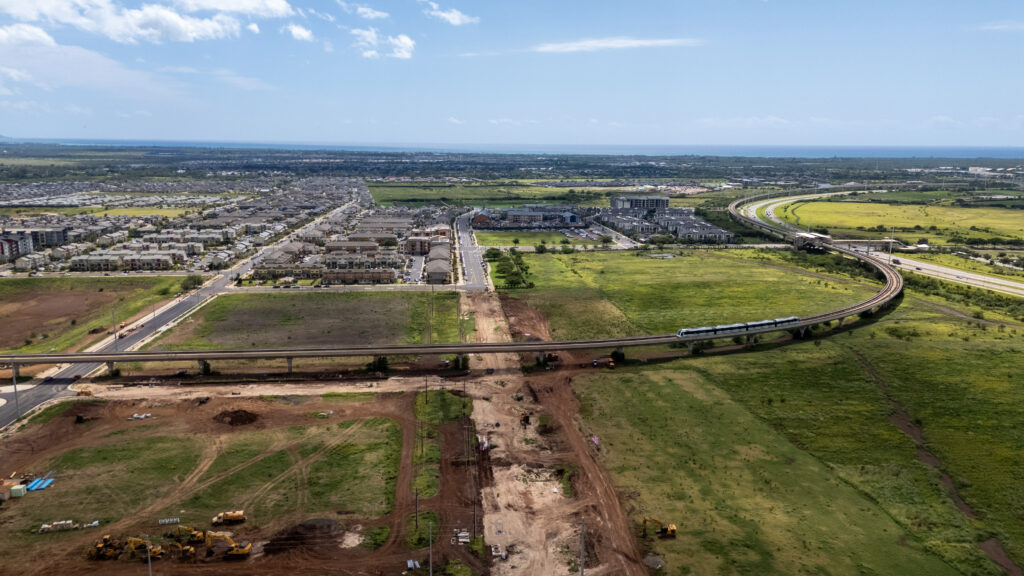
When Hoʻopili announces future income-restricted phases, they’ll appear on our lottery calendar. The community features multiple recreation centers with pools, a community garden, and schools — and its two Skyline rail stations have been open since June 2023.
Kapiʻolani Residence — Affordable Resale Condos
Completed in 2018 at 1631 Kapiʻolani Boulevard near Ala Moana, Kapiʻolani Residence was one of Honolulu’s first major projects with a 60/40 affordable-to-market unit split. Of 485 total units in the 45-story tower, 292 are HHFDC-regulated affordable units.
While no new units remain for initial sale, affordable resale units do appear on the market periodically—recently listing from the $360,000s to over $700,000 depending on bedroom count and floor. Buyers of these resale affordable units must still meet HHFDC income and eligibility requirements during the buyback period.
If you’re open to resale rather than brand-new construction, Kapiʻolani Residence offers one of the most centrally located affordable housing options in Honolulu, steps from Ala Moana Center.
AMI Income Limits: Do You Qualify?
Your eligibility depends on your household size and gross annual income compared to the Honolulu AMI. Here are the 2026 limits for the most common thresholds (HHFDC schedule, effective May 1, 2026; values marked ~ are derived from the published caps — confirm the official table with the program administrator):
| Household Size | 100% AMI | 120% AMI | 140% AMI |
|---|---|---|---|
| 1 person | ~$107,800 | $129,360 | ~$150,920 |
| 2 persons | ~$123,200 | ~$147,840 | ~$172,480 |
| 4 persons | $154,000 | $184,800 | ~$215,600 |
| 8 persons | ~$203,300 | $243,960 | ~$284,620 |
Source: HHFDC 2026 income limits, effective May 1, 2026 (HUD median family income $133,400). The City’s DHLM publishes a separate schedule for city-administered programs. For a personalized calculation, use our income limits page.
How to Apply for Affordable New Construction on Oahu
The application process varies by development, but most follow a similar pattern:
- Register your interest. Sign up on the developer’s website or interest list. For Hoʻopili, join D.R. Horton Hawaiʻi’s interest list. For Kahuina, contact Stanford Carr Development. For Keʻolu, register through Castle & Cooke.
- Confirm eligibility. Gather documents proving your Hawaiʻi residency, household income, and that you do not own residential property. See our full qualification guide for a complete document checklist.
- Enter the lottery (or apply FCFS). Most developments use a lottery system for affordable units. Your lottery number determines the order in which you pick a unit.
- Select your unit and sign a purchase contract. When your number is called (lottery) or a unit becomes available (FCFS), you choose your home, sign the contract, and submit your deposit—typically $1,000–$10,000 initially.
- Secure financing. Many developments have a preferred lender list. Get pre-approved early. Some projects periodically offer promotional financing — ask the sales office what’s current.
Stay current on upcoming lottery dates by bookmarking our Oahu affordable housing lottery calendar.
Common Disqualifiers to Watch Out For
Even if your income falls within the AMI limits, you can be disqualified for several reasons:
- Property ownership: Most programs require you to have had no ownership interest in any residential property within the past 12 months.
- Credit issues: While there’s no universal minimum credit score, you must be able to secure financing. Lenders typically want a 620+ score for conventional loans.
- Residency: You must be domiciled in Hawaiʻi—not just a part-time resident or investor.
- Citizenship: You must be a U.S. citizen or legal permanent resident.
- Age: Applicants must be at least 18 years old.
- Asset limits: Some HHFDC programs also impose asset limits beyond income. Check with the specific development.
Tips to Strengthen Your Application
- Get pre-approved early. Having a mortgage pre-approval letter ready shows developers you’re a serious, qualified buyer.
- Clean up your credit now. If your score is below 620, start paying down debt and disputing errors at least 6 months before you plan to apply.
- Gather your documents in advance. You’ll need two years of tax returns, recent pay stubs, bank statements, and proof of Hawaiʻi residency (driver’s license, utility bills, etc.).
- Register for multiple developments. Don’t put all your eggs in one basket. Register interest lists at Keʻolu, Kahuina, and Hoʻopili simultaneously so you’re ready when windows open.
- Attend informational sessions. Most developers hold in-person or virtual info sessions where you can ask questions and get an edge on the process.
- Understand the buyback period. Affordable units typically come with a 10-year buyback restriction. Make sure you’re comfortable committing to the property for that period.
Frequently Asked Questions About Affordable New Construction on Oahu
What is the cheapest new construction home on Oahu in 2026?
Uluwehi’s market-rate condo entry was advertised at $487,960 on October 8, 2026. For income-qualified Keʻolu or market-rate Lau Leʻa at Koa Ridge, request the current release documents or home list. Do not use an earlier phase’s price range, income limit or application window as proof of a current offering.
What income do I need to qualify for affordable housing on Oahu?
It depends on the development and your household size. Most programs cap income at 120%–140% of the Area Median Income (AMI). Under the 2026 HHFDC schedule (effective May 1, 2026), 120% AMI for a family of four is $184,800; for a single person it’s $129,360. Use our income limits page for your exact threshold.
How does the affordable housing lottery work on Oahu?
You register with the developer and submit proof of eligibility. A random lottery assigns you a number, and when your number is called, you select an available unit and sign a purchase contract. Each developer runs its own lottery. As of July 2026, Keʻolu at Koa Ridge is the only active one — see our lottery calendar for upcoming dates.
Can I own property and still qualify for affordable new construction?
No. Most affordable housing programs require that you have had no ownership interest in any residential property within the past 12 months. This includes properties on the mainland or anywhere else. You must be a genuine first-time or returning buyer without current real estate holdings.
What is the 10-year buyback restriction on affordable homes?
When you purchase an affordable housing unit, the City & County of Honolulu or HHFDC retains the right to repurchase the unit if you sell within 10 years. This prevents investors from flipping affordable homes for profit. After the buyback period expires, you can sell at market price, though some restrictions may still apply depending on the program.
What does AMI mean for Oahu housing?
AMI stands for Area Median Income — the midpoint income for Honolulu County as determined by HUD ($133,400 median family income for 2026; the HHFDC 100% program limit for a family of four is $154,000, effective May 1, 2026). Affordable housing programs use AMI percentages (80%, 100%, 120%, 140%) to set income eligibility cutoffs. A household at 120% AMI earns up to 20% more than the median; at 140%, up to 40% more.
Which affordable new construction development is best for military families?
Military buyers can compare Central Oʻahu options near Schofield Barracks and Wheeler with Ho‘opili in West Oʻahu. Uluwehi advertised condos from $487,960 on October 8, 2026. Confirm any Keʻolu release’s price and income requirements separately. Ask a VA-approved lender how your income and BAH are treated and whether the specific property qualifies; financing is not guaranteed by the community name.
How many affordable new construction developments are on Oahu right now?
As of July 2026, the landscape is: Keʻolu at Koa Ridge (active lottery), Kahuina in Kakaʻako (initial lottery held January 2026; Lamakū release TBA), Kuilei Place in Moʻiliʻili (closed, 85%+ sold), Ulana Ward Village (completed 2025, resale-only), and affordable resales at Kapiʻolani Residence near Ala Moana. Hoʻopili currently has no income-restricted lottery.
Your next step
Make sense of your options.
Have a question about a community or a floor plan? Team Wong can help you work through the details.
Ask Team Wong