ʻAhakea update — September 29, 2026: Detached GenHomes are the first phase; the second phase adds townhomes and attached FLEX homes. Older detached prices below are historical, not current offers. Confirm pricing and availability by home type. Compare the two phases.
Ho‘opili pricing note — October 8, 2026: Uluwehi advertises from $487,960; its 11 priced homes span $487,960–$629,460. Advertised community entries are not promises of a particular bedroom count, FLEX® layout or available home. Other communities and historical comparisons retain their own stated dates. See the dated Ho‘opili pricing guide for the separate advertised and listed-home figures.
Last Updated: July 6, 2026
TL;DR: Oʻahu has 15+ active new construction
developments, from $487,960 condos at Hoʻopili to $40M+ Ward Village
penthouse listings, plus affordable lotteries like Keʻolu at Koa Ridge
($550s–$640s). West and Central Oʻahu (Hoʻopili, Koa Ridge, Kaʻulu)
dominate single-family and townhome construction, while urban Honolulu
builds high-rise condos. Skyline rail already runs from East Kapolei to
Middle Street, and military demand keeps West Oʻahu moving.
Quick Facts:
Oʻahu New Construction Market 2026
| Category | Details |
|---|---|
| Active Developments | 15+ major projects |
| Total Homes Planned | 10,000+ units through 2030 |
| Price Range | $487,960 (Hoʻopili condos) to $40M+ (Ward Village penthouse listings) |
| Primary Areas | West Oʻahu (Ewa Beach, Kapolei), Central Oʻahu (Waipio), Honolulu (Kakaʻako, Ward Village) |
| Top Developers | D.R. Horton, Castle & Cooke, Gentry Homes, Howard Hughes Corporation |
| Affordable Housing | Keʻolu at Koa Ridge ($550s–$640s lottery) is the only program actively selling (July 2026) |
| Rail Impact | 13 Skyline stations open (East Kapolei–Middle Street); downtown segment ~2031 |
Why Buy New Construction on
Oʻahu?
The Case for New vs Resale
Advantages:
- Modern efficiency: New homes meet 2024 energy codes
(30-40% lower utility bills vs pre-2010 homes) - 10-year structural warranty: Peace of mind vs aging
resale homes - Turnkey ready: No renovation costs, modern
appliances included - Master-planned amenities: Parks, pools, community
centers built-in - Affordable housing lotteries: master-planned projects reserve units for income-qualified buyers — availability comes and goes (Keʻolu at Koa Ridge is the active program in July 2026)
- Appreciation potential: Hoʻopili resales up 15-25%
since original purchase (2020-2024 data)
Trade-offs:
- Limited negotiation: Builders set prices (though
incentives available) - Construction delays: 12-18 month build times
typical - Smaller lots: Modern lots 3,500-5,000 sqft vs
7,500+ sqft older neighborhoods - HOA fees: $200–$1,200/month for master-planned
communities - New neighborhood feel: Takes 5-10 years for mature
landscaping, established community
Oʻahu’s Active
Developments: Complete Directory
West Oʻahu (Ewa Beach /
Kapolei)
1. Hoʻopili
- Location: Ewa Beach (South of H-1, between Fort
Weaver Rd & Ft Barrette Rd) - Total Homes: 12,000 planned (18+
neighborhoods) - Price Range: $489,950 (Uluwehi townhomes) – $1.14M+ (Nanahea single-family), July 2026
- Developer: D.R. Horton
- Home Types: Single-family (2-5 bedrooms),
townhomes - August 23, 2026 sales snapshot: five communities were listed as selling (starting prices checked August 23, 2026): Uluwehi ($489,950+), Alana ($556,480+), Kāpili ($654,945+), ʻAhakea ($763,240 (historical detached quote, Aug. 2026)), Nanahea ($925,990+). Noho Papa, Mōlehu, Ikena, Kohina and ʻAkoko are sold out. D.R. Horton labels Alana “Sold Out” (checked October 11, 2026). Check Alana availability before relying on earlier prices.
- Standout Features:
- Largest master-planned community in Hawaii history
- 1,200 acres with 5 future DOE schools
- Honouliuli (Hoʻopili) Skyline rail station — open since June 2023
- Reserved/affordable releases appear periodically (none open as of July 2026)
- Walkable town center planned
- Timeline: Phases through 2035+
- More info: Complete Hoʻopili Guide | Hoʻopili Prices 2026
2. Koa Ridge
- Location: Central Oʻahu (Waipio, North of H-1
between Kunia & Mililani) - Total Homes: 3,500 planned (8 neighborhoods)
- Price Range: Keʻolu affordable townhomes $550s–$640s (lottery) · Nanea III single-family $1.34M–$1.63M (July 2026)
- Developer: Castle & Cooke Hawaiʻi (Dole Foods
parent company) - Home Types: Single-family (3-5 bedrooms),
townhomes - Status: 2 active programs (July 2026): Nanea III (market-rate single-family) and Keʻolu (affordable lottery). Waioha II closed out.
- Standout Features:
- Central Oʻahu location (shorter commute to town vs West Oʻahu)
- 12 acres dedicated for a future DOE elementary school (still in planning as of 2026)
- Less humidity than Ewa Plain (higher elevation)
- Keʻolu affordable lottery (120% AMI, higher income limits)
- Keʻolu is Oʻahu’s only affordable-lottery program actively selling (July 2026)
- Timeline: Phases through 2033+
- More info: Koa Ridge Hub | Hoʻopili vs Koa Ridge
3. Kaʻulu
Kaʻulu pricing context (September 28, 2026): Release 15 figures on this page are historical March 2026 prices. Release 16 subsequently offered market townhomes at $715,050–$795,850 for an August 15 lottery; that does not establish today’s availability. See the dated release details and current-pricing guidance.
- Location: Kapolei (Makakilo side, off Kapolei
Pkwy) - Total Homes: 1,100+ planned
- Price Range: Release 15 (March 2026): townhomes $714,600–$794,850 · single-family $959,900–$987,800
- Developer: Gentry Homes
- Home Types: Single-family (3-4 bedrooms)
- Status: Active sales (2026)
- Standout Features:
- Gentry’s signature quality (higher-end finishes than D.R.
Horton) - Kapolei location (close to UH West Oʻahu, shopping)
- Reserved (affordable) townhomes offered to eligible buyers alongside market-rate homes
- Gentry’s signature quality (higher-end finishes than D.R.
- Timeline: Buildout ~2028
- More info: Kaʻulu Guide | Kaʻulu Floor Plans
4. Kekainani at Hoakalei
- Location: Hoakalei (ʻEwa Beach)
- Price Range: $2.5M–$3.4M+ (luxury single-family)
- Status: Limited inventory
- More info: Hoakalei Guide
5. Recently sold out in ʻEwa Beach
Gentry’s Makamae II and NorthPark have
sold out (gentryhawaii.com, July 2026). Kaʻulu is Gentry’s only active
Oʻahu community — everything else in ʻEwa by Gentry is resale.
Central Oʻahu
7. Mililani Mauka (built out — resale only)
- Location: Mililani (north side, above H-2)
- Status: Built out. Castle & Cooke completed Mililani
Mauka years ago — there are no new-construction sales here. Buyers weigh
Mauka resales ($850K–$1.3M typical for single-family, early-2026 MLS
range) against new homes at nearby Koa Ridge. - Schools: Mililani complex (highly rated)
- More info: Mililani Mauka vs Koa Ridge
Honolulu / Urban Oʻahu
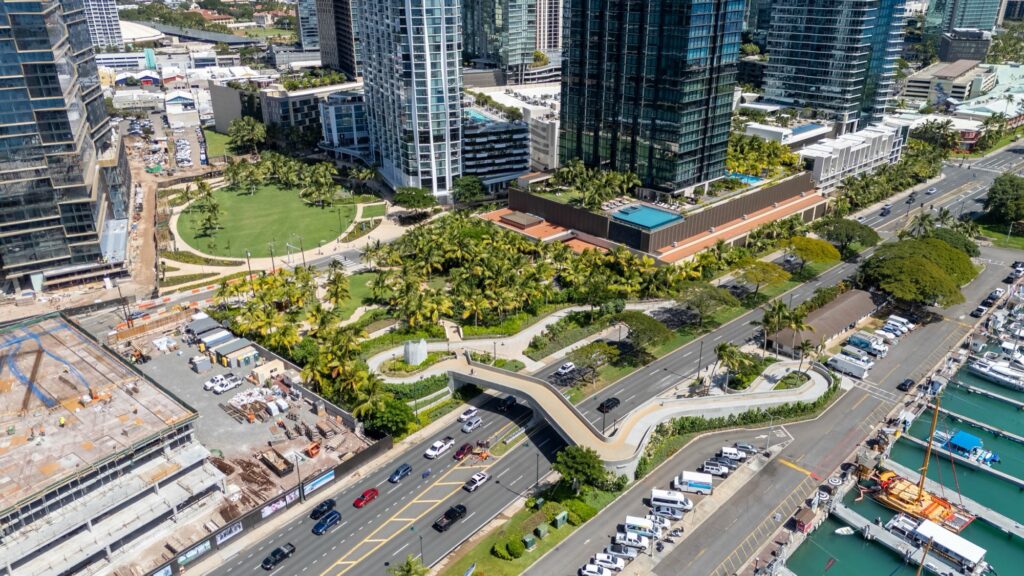
8. Ward Village
- Location: Kakaʻako, Honolulu (between Ala Moana
& Downtown) - Total Homes: 5,839 units (14 towers)
- Price Range: $271K (past reserved-housing lotteries) – $40M+ (penthouse listings)
- Developer: Howard Hughes Corporation
- Home Types: High-rise condos (studios to 4BR
penthouses) - Status: 9 towers complete (The Park Ward Village opened June 2, 2026), 2 under construction, more in pre-sales
- Standout Features:
- Walkable urban living (Walk Score 80+)
- Ground-floor retail, restaurants, parks
- 20% reserved housing (workforce housing lotteries)
- Ocean/mountain/city views
- Strong resale premiums in several early towers
- Timeline: Final towers through 2032+
- More info: Ward Village Hub
9. Kakaʻako Condos
(Various Developers)
- Location: Kakaʻako, Honolulu
- Total Homes: 1,000+ units (multiple projects)
- Price Range: $400K – $3M+
- Developers: Kamehameha Schools (Our Kakaʻako), Kobayashi Group, and others
- Status: Several projects in pre-sales or
construction - Timeline: 2026-2030+
10. Kuilei Place
- Location: Mōʻiliʻili, Honolulu (2599 Kapiʻolani Blvd, near UH Mānoa)
- Total Homes: 1,005 units (one high-rise tower)
- Price Range: $371K (reserved — 2023 lottery, closed) – $1.32M (market-rate)
- Developer: Kobayashi Group
- Home Types: High-rise condos (1–3 BR)
- Status: 85%+ sold; completion is estimated for early 2028 (July 21 developer update)
- Standout Features:
- Near UH Mānoa and Ala Moana; market-rate and reserved units in one tower
- Timeline: Early 2028 estimated completion (July 21 developer update); confirm your move-in date
- More info: Kuilei Place Guide
Understanding
Affordable Housing: Your Path to Homeownership
What is Affordable
Housing in Hawaiʻi?
Affordable housing units are sold below-market rates
to income-qualified buyers through lottery systems.
This is not “low-income housing” — middle-class families earning $100K–$150K+ often qualify.
How it works:
- Income limits: Based on Area Median Income (AMI).
Example: 140% AMI for family of 4 = ~$154,000/year gross income
(2025) - Lottery application: Apply during open windows
(30-60 days typically) - Random selection: Computer lottery selects buyers
from qualified applicants - Purchase at set price: Affordable units sold $200K–$400K below market value
- Resale restrictions: 10-year owner-occupancy
requirement, profit-sharing on resale
Affordable
Housing Opportunities (as of July 2026)
| Development | What’s offered | Income Limits | Price Range | Status (July 2026) |
|---|---|---|---|---|
| Keʻolu (Koa Ridge) | Affordable townhomes | Income-qualified (up to 120% AMI) | $550s–$640s | Active — the only affordable program currently selling |
| Hoʻopili | Reserved units by release | Varies per release | Set per release | No lottery open; watch new releases |
| Ward Village | Reserved housing per tower | Varies per tower | Set per tower | Announced with each new tower |
| Kuilei Place | Reserved units | Income-qualified | From $371K (2023 lottery) | Lottery closed; waitlist only |
Income Limits by AMI (Oʻahu 2025, Family of 4):
- 80% AMI: $88,000/year
- 100% AMI: $110,000/year
- 120% AMI: $132,000/year
- 140% AMI: $154,000/year
Tip: Higher AMI percentages = higher income limits =
more applicants. 80-100% AMI lotteries have better odds than 140%
AMI.
More info: Hoʻopili Lottery Guide
The Oʻahu New
Construction Buying Process
Timeline: Application to
Move-In
Phase 1: Research & Pre-Approval (1-3 months
before)
- Research developments, compare prices/locations
- Get mortgage pre-approval (required before most sales offices will
engage) - Attend model home tours
- Understand affordable vs market-rate qualification
Phase 2: Lot/Unit Selection & Contract (Day
1)
- Market-rate: Visit sales office, select available lot/floorplan,
sign purchase agreement - Affordable: Apply during lottery window → wait 30-60 days for
results → selection appointment if chosen
Phase 3: Deposit & Design (Weeks 1-4)
- Earnest money deposit: 3-10% of purchase price
- Design center appointment: Select flooring, countertops, cabinets,
fixtures - Upgrade costs: Budget $10K–$50K+ for popular upgrades
Phase 4: Construction (Months 2-15)
- Typical build time: 12-18 months for single-family, 24-36 months for
condos - Milestone payments: Some builders require additional deposits during
construction - Construction updates: Monthly emails, site visits allowed
Phase 5: Final Walk-Through & Closing (Month
15-18)
- Pre-closing walk-through: Inspect completed home, create punch
list - Closing: Sign loan docs, transfer funds, receive keys
- Move-in: Immediately after closing (or within 30 days for
condos)
Financing Considerations
Mortgage Options:
- Conventional: 3-20% down, best rates for 20%+
down - FHA: 3.5% down, lower credit requirements, mortgage
insurance required - VA (Military): 0% down, no mortgage insurance,
funding fee applies - USDA (Rural): 0% down for qualifying areas (parts
of Central/North Shore Oʻahu eligible)
Rate Snapshot (early 2026 — verify current rates with your lender):
- 30-year fixed rates: 6.5-7.5% (varies by lender, credit score)
- Monthly payment example: $700K home, 10% down ≈ $4,200/month (PITI)
Builder Incentives (Varies by Development):
- Rate buydowns: 1-2% off interest rate for first 1-2 years
- Closing cost credits: $5K–$15K toward closing costs
- Free upgrades: Appliances, flooring, solar panels
- HOA fee credits: 1-2 years prepaid HOA fees
Comparing the Major
Developments
Price Comparison: Where New
Pricing Starts (July 2026)
| Development | Entry price (new) | What that buys | HOA/Month |
|---|---|---|---|
| Hoʻopili | $487,960+ | Uluwehi condo; detached from $763,240 (historical detached quote, Aug. 2026) (ʻAhakea GenHomes); traditional single-family from $925,990 (Nanahea) | Varies by neighborhood — see HOA guide |
| Koa Ridge | $550s (lottery) / $1.34M (market) | Keʻolu affordable townhome (income-qualified) / Nanea III single-family | $67 master + sub-association where applicable |
| Kaʻulu | $714,600+ | Townhome (Release 15); single-family from $959,900 | $300–$500 (confirm with Gentry) |
| Ward Village | $800K+ (typical market-rate 1BR) | High-rise condo | $500–$800+ |
Location & Commute
Comparison
| Development | Distance to Downtown | Morning Commute | Evening Commute | Nearby Employment |
|---|---|---|---|---|
| Hoʻopili | 22 miles | 50-90 min | 60-120 min | Kapolei, JBPHH |
| Koa Ridge | 17 miles | 40-70 min | 50-90 min | Mililani, Pearl City |
| Kaʻulu | 21 miles | 50-85 min | 60-110 min | Kapolei, UH West Oʻahu |
| Ward Village | 0 miles (urban) | Walk/bike | Walk/bike | Downtown, Kakaʻako |
Rail today (July 2026): Skyline runs East Kapolei to
Middle Street, with stations at Hoʻopili (Honouliuli) and UH West Oʻahu
(Keoneʻae). The downtown segment is targeted for ~2031; Kakaʻako and Ala
Moana stations are deferred.
Lifestyle Comparison
| Development | Vibe | Best For | Amenities | Schools (Rated) |
|---|---|---|---|---|
| Hoʻopili | Suburban family | First-time buyers, military, families | Parks, pools, town center planned | Ewa Elementary (7/10), Campbell HS (6/10) |
| Koa Ridge | Suburban family | Families, commuters | Parks, school on-site | Mililani schools (8-9/10); on-site elementary still in planning |
| Kaʻulu | Suburban | Move-up buyers | Parks, pools, golf nearby | Kapolei schools (6-7/10) |
| Ward Village | Urban walkable | Young professionals, downsizers, investors | Retail, dining, beach nearby | Urban private schools |
More comparisons: Hoʻopili vs Koa Ridge | Hoʻopili vs Ward
Village
Rail Transit & New
Construction
How the Rail Impacts New
Home Buying
Current Status (July 2026):
- East Kapolei (Kualakaʻi) to Aloha Stadium (Hālawa): open since June
2023 — including the Honouliuli (Hoʻopili) and Keoneʻae (UH West Oʻahu)
stations - Segment 2 — Pearl Harbor, Daniel K. Inouye Airport, and Middle
Street (Kahauiki): opened October 16, 2025 - Segment 3 — six stations through Kalihi, Chinatown, Downtown, and
Civic Center: under construction, targeted ~2031 - Kakaʻako and Ala Moana stations: deferred indefinitely (not currently
funded)
Stations Near New Construction:
- Honouliuli (Hoʻopili) Station: serves Hoʻopili — open now
- Keoneʻae (UH West Oʻahu) Station: serves Kaʻulu and nearby Hoʻopili neighborhoods
- Kualakaʻi (East Kapolei) Station: serves Kapolei-area developments
Impact on Home Values:
- Homes within 0.5 mile of rail: +5-15% premium (national data)
- Hoʻopili seeing early appreciation (15-25% since original sales
2020-2023) - Rail reaches Middle Street today; downtown service is targeted for ~2031. The line does not currently reach Ala Moana.
Buyer Considerations:
- Rail access is already real in West Oʻahu — homes near the Honouliuli and Keoneʻae stations already market it
- Noise: Stations are elevated, some homes within 500ft may experience
train noise - Transit-oriented development: Hoʻopili is planning a walkable town center near its station
Military Buyers: What You
Need to Know
Why New
Construction Appeals to Military Families
Advantages:
- VA loan friendly: Most builders accept VA loans (0%
down, no PMI) - BAH alignment: West Oʻahu prices align with E-6/E-7
BAH (~$3,000–$3,600/mo) - Modern construction: Energy-efficient, low
maintenance, turnkey - Proximity to bases: Hoʻopili/Kaʻulu 15-20 min to
JBPHH, Schofield via H-1 - Resale potential: Military turnover creates steady
buyer pool
Military-Specific Considerations:
- PCS timeline: Ensure 2-3 year tour allows for 12-18
month build + 1+ year occupancy - BAH coverage: $700K home ≈ $4,200/mo payment, may exceed BAH even for O-3/O-4
- Rental potential: West Oʻahu rentals $2,800–$3,800/mo, positive cash flow
possible - Resale vs rental: Calculate whether selling or
renting makes sense for PCS
Popular Developments for Military:
- Hoʻopili: Largest selection, affordable options, near JBPHH
- Koa Ridge: Near Schofield, Wheeler, Wahiawa military community
- Kaʻulu: JBPHH proximity, Gentry quality
Investor Considerations
Can You Profit from
Oʻahu New Construction?
Short-Term Appreciation (Flip Strategy):
- Risk: High. Hawaii market slow-moving, closing
costs 10-12% of sale price - Realistic timeline: 3-5 years minimum to recoup
costs + profit - Success stories: Early Hoʻopili buyers (2020-2023)
seeing 15-25% appreciation - Verdict: Only viable if you lock in below-market
price (affordable lotteries prohibited from resale <10 years)
Long-Term Hold (Rental Strategy):
- Rental demand: Strong in West Oʻahu (military,
local families, UH West students) - Rental rates: 3BR single-family $2,800–$3,800/mo (West Oʻahu), $3,500–$5,000+ (urban condos)
- Cash flow: Typically negative $200–$800/mo (mortgage higher than rent), but
builds equity - Appreciation: Historical Oʻahu average 3-5%/year,
new construction slightly higher - HOA considerations: $200–$1,200/mo eats into profit, factor into
cash flow analysis - Vacation rental: Prohibited in most new
developments (check CC&Rs)
Best Bets for Investors:
- Ward Village condos: strong resale premiums in several early towers, high rental demand
- Hoʻopili/Koa Ridge: Lower entry price, military
rental demand, rail-driven appreciation potential - Avoid: Affordable housing (10-year resale
restrictions, profit-sharing kills ROI)
Common Mistakes to Avoid
1. Not Getting
Pre-Approved Before Shopping
Why it matters: Sales offices won’t take you
seriously without pre-approval. Affordable lotteries require
pre-qualification. You might fall in love with a home you can’t
afford.
Fix: Get pre-approved with 2-3 lenders before
touring models.
2. Underestimating Total
Monthly Costs
The trap: Focusing only on mortgage payment,
ignoring HOA, insurance, property tax, maintenance reserve.
Reality check:
- $700K home mortgage: $4,200/mo (7% rate, 10% down)
- HOA: $450/mo
- Insurance: $150/mo
- Property tax: $210/mo (0.36% annual)
- Total: $5,010/mo (not $4,200!)
Fix: Use total PITI + HOA for budget, not just
principal+interest.
3. Skipping the Design
Center Strategy
Mistake: Saying “yes” to every upgrade, blowing
budget.
Smart strategy:
- Prioritize resale value: Flooring, countertops,
cabinets (buyers see these) - Skip low-ROI upgrades: Fancy lighting fixtures,
custom paint colors (easy DIY later) - Negotiate: Ask for free upgrades or closing cost
credits instead of cash discounts
4. Ignoring HOA Fee
Escalation
Reality: HOA fees increase 3-5% annually. $450/mo
today = $585/mo in 10 years.
Long-term impact: $450/mo HOA over 30 years =
$194,000 total paid (assuming 4% annual increase)
Fix: Factor HOA growth into affordability analysis.
Compare HOA fee history at mature communities.
5. Not
Reading CC&Rs (Covenants, Conditions & Restrictions)
Hidden rules:
- No street parking overnight
- No RVs/boats on property
- Exterior paint color pre-approval required
- Backyard structure restrictions (pergolas, sheds)
Fix: Request CC&Rs during due diligence period,
read carefully (or have attorney review).
6. Assuming Rail Will
Fix Commute Issues
Reality: Rail helps, but not magic. Hoʻopili to Ala
Moana = 50 min by rail (not door-to-door — add driving to station,
waiting, walking from station).
Fix: Visit the development at rush hour, drive your
actual commute route before buying.
7. Buying Affordable
Housing for Investment
Fatal flaw: 10-year owner-occupancy requirement.
Profit-sharing on resale (60-80% of appreciation goes back to
developer/city).
Fix: Affordable housing is for owner-occupants
building equity, NOT investors seeking profit.
Frequently Asked Questions
(FAQ)
1.
What’s the difference between market-rate and affordable housing?
Market-rate homes are sold at full market price to
any qualified buyer. Affordable housing units are sold
below-market to income-qualified buyers through lottery systems, with
10-year resale restrictions. Example: A $700K market-rate home might
sell for $450K as an affordable unit to a family earning $110,000/year
(100% AMI).
2.
How long is the waitlist for affordable housing lotteries?
There is no waitlist for most lotteries — it’s a random selection
process during open application windows (30-60 days). (Kohina at Hoʻopili, which ran a waitlist, is sold out.) Your odds depend on the number
of applicants (typically 500-2,000 applicants per 50-100 units).
3. Can I see the
property before it’s built?
Yes, all developments have model homes open for
tours (usually 10am-5pm, 7 days/week). You’ll see 2-4 floorplans fully
furnished and staged. For condos, developers create off-site model units
or design center presentations with 3D renderings.
4. What happens if
construction is delayed?
Most purchase agreements include an estimated completion date with a
12-month extension clause allowing the builder to delay
without penalty. You cannot cancel due to delays unless the builder
exceeds the extension period. Buyers have reported delays of 3-6 months
beyond original estimates during the COVID/supply chain era (2021-2023),
though timelines have improved in 2024-2026.
5. Do new
homes in Hawaiʻi come with solar panels?
Increasingly yes. New Hawaii energy code (2024+)
requires solar water heaters and highly encourages solar PV. Many
builders include solar PV as standard (Hoʻopili, Ward Village) or offer
it as a subsidized upgrade. Homes with solar can qualify for lower
interest rates through energy-efficient mortgages.
6. Is Hoʻopili really
that far from town?
Distance: 22 miles from Hoʻopili to Downtown
Honolulu.
Drive time: 50-120 minutes during rush hour (worst
case), 30-35 minutes midday.
Rail impact: The Honouliuli (Hoʻopili) Skyline station has been open since June 2023, with service to Pearl Harbor, the airport, and Middle Street since October 2025. Downtown service is targeted for ~2031; the line does not currently reach Ala Moana. Many residents work at JBPHH (15 min), Kapolei (10 min), or remote.
7. Are HOA fees
tax-deductible?
No for primary residences. Yes for
rental properties (as an operating expense). If you convert your primary
residence to a rental, HOA fees become deductible starting the year of
conversion.
8. Can I rent
out my new home if I need to move?
Market-rate: Yes, unless CC&Rs prohibit rentals
(some Ward Village towers restrict short-term rentals <30 days).
Affordable: No rentals allowed during the 10-year
owner-occupancy period. Violating this forfeits your affordable purchase
and triggers penalties.
9. Which development
has the best schools?
Koa Ridge has access to highly-rated Mililani schools (8-9/10 ratings), with 12 acres set aside for a future on-site elementary (still in planning).
Hoʻopili has adequate schools (Ewa Elementary, Campbell
HS rated 6-7/10) with 5 new DOE schools planned through 2035.
Ward Village relies on urban private schools or Hawaii
Department of Education’s downtown schools.
10. Is new
construction a good investment in Hawaiʻi?
For equity building: Yes. Paying down a mortgage
builds forced savings, and historical Oʻahu appreciation averages
3-5%/year.
For cash flow: Usually no (negative $200–$800/mo after expenses).
For flipping: Risky due to high closing costs (10-12%)
and slow market.
Best investor play: Early buy in upcoming developments
(lock in pre-appreciation) or Ward Village condos (strongest
appreciation track record).
11. Do I need a
realtor to buy new construction?
Not required, but recommended. Builder sales reps
work for the builder, not you. A buyer’s agent can:
- Negotiate incentives/upgrades
- Review contracts for red flags
- Compare developments objectively
- Guide you through design center decisions
Cost: Buyer’s agent is typically paid by the builder
(3% commission split from sale price), so it costs you nothing. Some
builders offer the same incentives whether you bring an agent or not, so
there’s no downside.
12.
What if I need to sell before construction is complete?
Most contracts allow you to assign (transfer) your
purchase agreement to another buyer, subject to builder approval and a
reassignment fee (typically $5,000–$15,000). You cannot profit from the
assignment in most cases — the new buyer pays the original contract
price, and you recover your deposit minus fees. Some contracts prohibit
assignment entirely (check before signing).
13. Are utilities
included in HOA fees?
Single-family homes: Typically no. HOA covers common
area landscaping, amenities (pools, parks), road maintenance.
Condos: Often yes. Many Ward Village towers include
water, sewer, and central A/C in HOA fees. Check the offering memorandum
for specifics.
You always pay separately: Electricity (unless solar
with battery), internet, cable TV.
14. Can I
make changes to the floorplan after signing?
Structural changes: Rarely allowed (moving walls,
adding rooms). Must request before construction starts.
Finish changes: Yes, during the design center
appointment (usually 30-60 days after contract signing). After
construction starts, changes are difficult/expensive or
prohibited.
Post-closing changes: Your home, do what you want — but
check HOA CC&Rs for exterior restrictions (paint colors,
landscaping, additions).
15. How do
I know if I qualify for affordable housing?
Step 1: Check your gross household income (all
earners, before taxes).
Step 2: Find the development’s AMI requirement (e.g.,
140% AMI for family of 4 = $154,000/year in 2025).
Step 3: If your income is ≤ the limit, you qualify.
Apply during open lottery windows.
Step 4: If selected, you’ll verify income (2 years tax
returns, pay stubs, bank statements) before purchase.
Tip: Asset limits also apply (some lotteries cap
total assets at $500K–$1M
excluding retirement accounts).
Next Steps: Your New
Construction Roadmap
30-60 Days Before Buying
✅ Research developments (this guide + individual development
pages)
✅ Tour 3-5 model homes to compare
✅ Get pre-approved with 2-3 lenders (compare rates/fees)
✅ Calculate your true monthly budget (PITI + HOA)
✅ Determine if you qualify for affordable housing lotteries
Application/Contract Phase
✅ Apply for affordable lotteries (if eligible) OR visit sales office
(market-rate)
✅ Review purchase agreement with realtor or attorney
✅ Submit earnest money deposit (3-10%)
✅ Schedule design center appointment
During Construction (12-18
months)
✅ Make design selections (flooring, counters, cabinets,
fixtures)
✅ Finalize financing (30-60 days before closing)
✅ Attend construction walk-throughs (optional, some builders
allow)
✅ Stay in touch with builder for completion updates
Pre-Closing (30-60 days
before)
✅ Complete final walk-through (create punch list of issues)
✅ Get final loan approval and clear to close
✅ Transfer closing funds (wire or cashier’s check)
✅ Schedule movers, utilities, internet
Closing Day & Beyond
✅ Sign loan documents, receive keys
✅ Move in! (or within 30 days for condos)
✅ Complete punch list items with builder (usually 30-60 day
window)
✅ File homeowner’s exemption (Hawaii property tax break, saves $100–$150/year)
Additional Resources
Development-Specific Guides
- Complete Hoʻopili Guide — 18+
neighborhoods, pricing, lottery info - Koa Ridge Hub — Central Oʻahu alternative by Castle & Cooke
- Ward Village Hub — Urban living, 9 towers complete, investment data
Comparison Guides
- Hoʻopili vs Koa Ridge — Detailed head-to-head comparison
- Hoʻopili vs Ward
Village — Suburban vs urban living - Ward Village vs Koa Ridge — Central vs urban
Specialized Guides
- Hoʻopili Prices 2026 — Neighborhood-by-neighborhood pricing
- Hoʻopili Lottery Guide — Step-by-step application process
- Hoʻopili Floor Plans Guide — Compare floor plans by neighborhood
- Hoʻopili HOA Fees — Transparent fee breakdown + projections
Monthly Market Reports
- March 2026 Oʻahu
New Homes Report — Latest market updates - February 2026
Oʻahu New Homes Report — Historical data
About This Guide: New Construction Hawaii is an
independent resource for Oʻahu homebuyers. We are not affiliated with
any developer or real estate brokerage. All data is researched from
public sources, developer websites, and on-site visits. Prices and
availability change frequently — verify all information with the
developer before making decisions.
Last Updated: July 6, 2026
Your next step
Make sense of your options.
Have a question about a community or a floor plan? Team Wong can help you work through the details.
Ask Team Wong