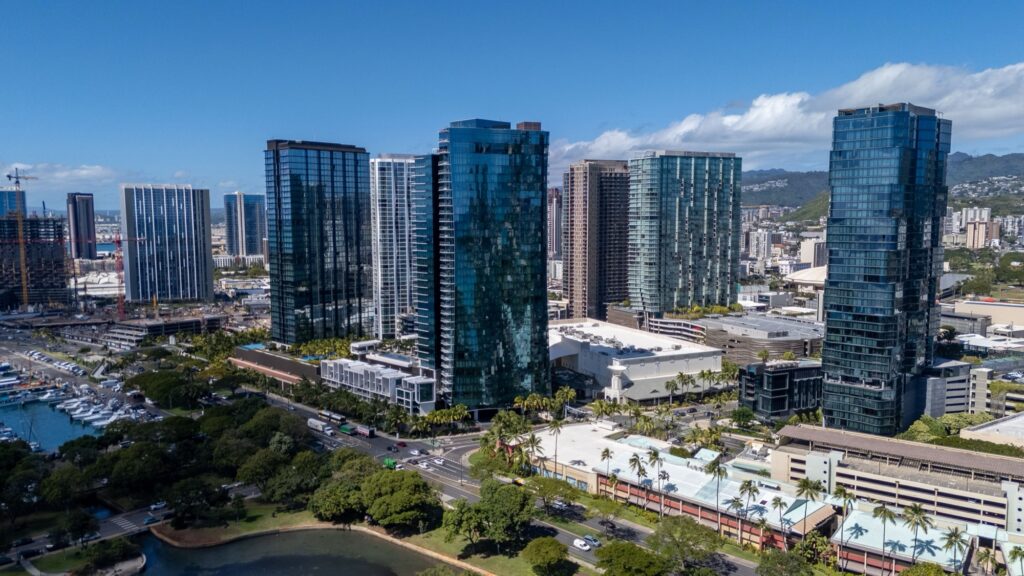
New construction vs resale in Hawaiʻi comes down to timeline, budget, and priorities. New construction homes at developments like Hoʻopili and Ward Village run from $489,950 (Hoʻopili condos, July 2026) to over $2M, offer presale appreciation potential, and come with 10-year structural warranties—but require 2–4 years of patience. Resale homes let you move in within 30–45 days, negotiate on price, and skip lottery systems, though they may need renovations and carry higher maintenance costs. Here’s everything you need to know to make the right choice on Oʻahu.
New Construction vs Resale Hawaiʻi: Quick Comparison
| Feature | New Construction | Resale |
|---|---|---|
| Price Range (Oʻahu) | $380K (Koa Ridge studios)–$2.5M+ (Jul 2026) | $500K–$2M+ (varies widely) |
| Move-In Timeline | 1–4 years (presale) or 45–60 days (inventory) | 30–45 days after accepted offer |
| Customization | Floor plan selection, upgrades available | Renovate after purchase |
| Warranties | 1-year builder + 10-year structural | None (unless transferable) |
| HOA Fees | $200–$1,200/mo (new amenities) | $100–$1,500/mo (varies by age/amenities) |
| Negotiation | Fixed pricing, limited negotiation | Offer below asking, negotiate repairs |
| Appreciation | Presale appreciation during construction | Market-dependent |
| Energy Efficiency | Modern codes, solar-ready, EV charging | May need upgrades |
| Location Options | Limited to active developments | Any neighborhood island-wide |
| Purchase Process | Lottery or priority list | Traditional offer and escrow |
Why the New Construction vs Resale Decision Is Different in Hawaiʻi
On the mainland, choosing between new construction and resale is mostly about preferences—granite countertops versus character and charm. In Hawaiʻi, the calculus is fundamentally different because of three factors unique to the islands.
Land scarcity drives premiums. Oʻahu is 97% built out or preserved. With strict agricultural and conservation zoning, developable land is extraordinarily limited. This means new construction in Hawaiʻi commands a structural premium that doesn’t exist in markets like Phoenix or Dallas, where builders can expand endlessly into desert. When a development like Koa Ridge opens 3,500 homes on former agricultural land in Central Oʻahu, it’s not just another subdivision—it’s one of the last large-scale developments the island will ever see.
Presale culture creates unique opportunities. Hawaiʻi’s new construction market operates on a presale model where you purchase 1–4 years before your home is built. This isn’t common on the mainland, but it’s standard here, especially at condo towers in Ward Village and master-planned communities like Hoʻopili. That timeline creates both risk and opportunity.
Affordable housing programs are tied to new construction. Hawaiʻi’s affordable housing lotteries—where income-qualified buyers can purchase homes well below market rate—exist almost exclusively in new developments. If you qualify, this changes the math entirely.
New Construction in Hawaiʻi: Pros and Cons
Advantages of Buying New Construction
Presale appreciation. This is the single biggest financial advantage of new construction in Hawaiʻi. When you lock in a presale price at contract signing, your home’s market value can appreciate significantly during the 2–4 year construction period. Buyers at Ward Village’s earlier towers saw 15–25% appreciation between presale and completion. At Hoʻopili, townhomes purchased in early phases for the low $600Ks have resold for $750K+ after completion. You’re effectively getting leveraged real estate appreciation with a relatively small initial deposit (typically 5–20%).
Modern building standards. Hawaiʻi has adopted successively stricter building codes over the past decade. New homes meet current hurricane-resistance standards, include solar-ready electrical panels, offer EV charging infrastructure, and feature energy-efficient windows and insulation designed for tropical climates. Older resale homes—especially those built before 2000—may lack these features and require expensive retrofits.
Warranties reduce risk. New construction in Hawaiʻi comes with a 1-year builder warranty covering defects and a 10-year structural warranty. In a climate where salt air, humidity, and termites accelerate wear, this protection has real financial value. Resale buyers absorb all maintenance risk from day one.
Affordable housing lotteries. Large developments are required to include income-restricted units priced below market. Availability comes and goes with each phase: as of July 2026, Keʻolu at Koa Ridge ($550s–$640s, 120% AMI) runs the only active purchase lottery on Oʻahu. Check the lottery calendar for upcoming opportunities or visit our affordable housing hub to see if you qualify.
Disadvantages of Buying New Construction
Timeline uncertainty. Construction delays are common in Hawaiʻi due to shipping logistics (all materials arrive by barge), labor shortages, and permitting backlogs. A home estimated for 2027 completion could slip to 2028. This is especially challenging for military families on PCS orders who need housing within a specific window.
Fixed pricing, limited negotiation. Developers set prices and rarely negotiate. You won’t get $30K off asking price like you might with a motivated resale seller. Upgrades and options add cost quickly—premium flooring, expanded lanai packages, or appliance upgrades can add $20K–$60K to the base price.
Location constraints. New construction is only available where developers are currently building: primarily ʻEwa Beach (Hoʻopili, Kaulu), Central Oʻahu (Koa Ridge), and urban Honolulu (Ward Village, Kuilei Place). If you want to live in Kailua, Hawaiʻi Kai, or the North Shore, resale is your only option.
HOA fees on new developments. New master-planned communities come with HOA fees that cover fresh amenities—pools, parks, community centers. At Hoʻopili, HOA fees range from $200–$500/month depending on the neighborhood. Ward Village condos can run $600–$1,200/month. These are often higher than established resale communities where infrastructure costs have been amortized.
Resale Homes in Hawaiʻi: Pros and Cons
Advantages of Buying Resale
Immediate availability. You can close on a resale home in 30–45 days. For military families arriving on PCS orders or anyone relocating with a firm start date, this timeline certainty is invaluable. You see exactly what you’re buying—no model home imaginings or floor plan guessing.
Location flexibility. Resale opens the entire island. Want a walkable neighborhood in Kaimukī? A beachfront townhome in Hawaiʻi Kai? A rural property on the North Shore? None of these areas have active new construction. Resale is the only path to most of Oʻahu’s established neighborhoods.
Negotiation leverage. In a balanced or buyer-friendly market, resale homes offer negotiation room. You can offer below asking, request repair credits after inspection, or negotiate closing cost assistance. In 2025–2026, Oʻahu resale inventory has increased enough that buyers have more leverage than during the 2021–2022 frenzy.
Established communities. Mature landscaping, proven neighbor dynamics, known school assignments, and established commute patterns. You know exactly what the neighborhood feels like because it’s already built out. New developments are still evolving—construction noise, incomplete amenities, and uncertain retail timelines are common for the first 3–5 years.
Disadvantages of Buying Resale
Maintenance and renovation costs. Hawaiʻi’s climate is brutal on homes. Salt air corrodes metal, humidity promotes mold, and termites are a constant threat. A resale home built in the 1980s or 1990s may need $50K–$150K in updates: new roof, updated electrical, plumbing repairs, termite treatment, and cosmetic renovation. These costs aren’t always apparent during a showing.
No warranty protection. Unless the seller transfers a remaining home warranty, you’re responsible for everything from day one. A failed water heater, leaking roof, or HVAC replacement comes out of your pocket immediately.
Older building standards. Homes built before Hawaiʻi’s modern building codes may not meet current hurricane-resistance, energy-efficiency, or accessibility standards. Retrofitting can be expensive and may require permits.
No affordable housing programs. Hawaiʻi’s income-qualified affordable housing lotteries are tied exclusively to new developments. If you’re a first-time buyer earning under 140% of Area Median Income, you lose access to these below-market opportunities by choosing resale.
Presale Appreciation: A Hawaiʻi Case Study
The presale model is one of the most compelling—and least understood—advantages of buying new construction in Hawaiʻi. Here’s how it works in practice.
A buyer purchases a presale townhome at Hoʻopili in early 2023 for $650,000, putting down a 10% deposit ($65,000). The home is scheduled for completion in mid-2025. During those 2.5 years, Oʻahu’s market appreciates and the neighborhood establishes itself. By completion, comparable units are selling for $780,000—a $130,000 gain on a $65,000 deposit, representing a 200% return on the initial investment.
This leveraged appreciation is why Hawaiʻi’s presale market attracts both owner-occupants and investors. However, it cuts both ways: if the market declines during your construction period, you’re locked into your contract price. The deposit is typically non-refundable after contingencies expire.
Ward Village condos have shown even more dramatic appreciation. Early buyers at ʻAeʻo (completed 2019) and Koʻula (completed 2022) saw 20–30% gains from presale to completion. Current presale opportunities at Ward Village — Kalae and The Launiu, both estimated for ~2028 completion — follow the same model. Nine towers are already complete, most recently The Park Ward Village (opened June 2026).
New Construction vs Resale: Closing Timeline in Hawaiʻi
Understanding Hawaiʻi’s unique closing timelines is critical for planning your purchase.
New construction closing timeline: For presale purchases, you’ll sign a purchase agreement 1–4 years before completion. Your closing is triggered by the “countertop milestone”—when countertops are installed, the builder notifies you that closing will occur in approximately 45–60 days. This is your signal to finalize your mortgage, complete your final walkthrough, and prepare for closing. The timeline is set by the builder, not by you, which requires flexibility.
Resale closing timeline: After your offer is accepted, a typical Hawaiʻi resale transaction closes in 30–45 days. This includes a 10–15 day inspection period, appraisal (7–14 days), and lender processing. You have more control over this timeline and can often negotiate the closing date to align with your move-in needs.
For military families: If you’re on PCS orders to Oʻahu, the resale timeline aligns better with a typical reporting window. New construction presale requires you to already be on-island or planning to arrive 2+ years in advance. However, some developments offer move-in-ready inventory homes that can close within 45–60 days—check our guide to buying new construction in Hawaiʻi for current availability.
Affordable Housing: New Construction’s Biggest Advantage
For income-qualified buyers, Hawaiʻi’s affordable housing lotteries can make new construction dramatically cheaper than resale. Here’s why.
Oʻahu requires large developments to set aside a percentage of units as “affordable” — priced for households earning roughly 80–140% of the Area Median Income (under the 2026 HHFDC schedule, 120% AMI is $184,800 for a family of four). In past phases, Hoʻopili affordable 3-bedroom townhomes were priced in the $350K–$450K range versus $650K–$800K for market-rate units — a $200K–$350K discount for qualifying buyers. These windows open and close: as of July 2026, Hoʻopili has no active income-restricted lottery, and Keʻolu at Koa Ridge ($550s–$640s) is the island’s only one.
These opportunities don’t exist in the resale market. While some resale condos carry deed restrictions from original affordable designations, new lottery openings with the deepest discounts are exclusively tied to new developments. Visit our affordable housing hub to check income limits and see current programs, or browse the lottery calendar for upcoming registration deadlines.
Which Should You Choose?
Choose new construction if:
- You can wait 1–4 years for completion and don’t need immediate housing
- You want presale appreciation potential with a smaller upfront deposit
- You qualify for affordable housing lotteries and want below-market pricing
- Modern building standards, warranties, and energy efficiency matter to you
- You’re comfortable with ʻEwa Beach, Central Oʻahu, or urban Honolulu locations
Choose resale if:
- You need to move within 30–60 days (PCS, relocation, lease ending)
- You want a specific neighborhood not served by new developments
- You prefer to negotiate price and terms
- You want an established community with mature landscaping and known neighbors
- You’re comfortable budgeting for potential renovations and maintenance
Many buyers don’t choose one or the other—they consider both simultaneously. You can enter a presale contract at Hoʻopili or Koa Ridge while monitoring the resale market. If the right resale home appears before your new construction closes, you may be able to assign or cancel your presale contract (check your specific agreement terms).
Frequently Asked Questions
Is new construction more expensive than resale in Hawaiʻi?
Not always. New construction on Oʻahu ranges from $489,950 (Hoʻopili condos) and roughly $380K for Koa Ridge studios to over $2M (Ward Village condos), as of July 2026, while resale homes span a similar range depending on location and condition. However, new construction comes with fixed pricing—you can’t negotiate down like you can with a motivated resale seller. Affordable housing lotteries can also make new construction significantly cheaper than comparable resale options for qualifying buyers.
How long does it take to close on new construction in Hawaiʻi?
For presale purchases, you sign your contract 1–4 years before closing. The actual closing is triggered when countertops are installed (the “countertop milestone”), after which you have approximately 45–60 days to finalize your mortgage and close. Move-in-ready inventory homes can close in 45–60 days from contract signing.
What is presale appreciation in Hawaiʻi real estate?
Presale appreciation occurs when you lock in a purchase price at contract signing and the home’s market value increases during the 2–4 year construction period. In Hawaiʻi, presale buyers have seen 15–30% appreciation between purchase and completion at developments like Ward Village and Hoʻopili, effectively earning leveraged returns on their initial deposit.
Can I buy affordable housing through resale in Hawaiʻi?
Hawaiʻi’s affordable housing lottery programs are tied almost exclusively to new construction developments. While some resale condos carry deed restrictions from original affordable designations, the deepest discounts — often $100K–$300K below market — are only available through new-development lotteries. These come and go by phase; as of July 2026, Keʻolu at Koa Ridge is the only active lottery on Oʻahu.
Should military families buy new construction or resale on Oʻahu?
For most PCS moves, resale is more practical because you can close within 30–45 days of an accepted offer. New construction presale requires a 1–4 year wait that doesn’t align with typical 2–3 year tour lengths. However, if you’re on a longer assignment or plan to keep the property as a rental, new construction’s appreciation potential and warranty protection can make it worthwhile. Some developments also offer move-in-ready inventory homes with 45–60 day closings.
What warranties come with new construction in Hawaiʻi?
New construction homes in Hawaiʻi typically include a 1-year builder warranty covering defects in materials and workmanship, plus a 10-year structural warranty covering the foundation and load-bearing elements. This is especially valuable in Hawaiʻi’s harsh climate, where salt air, humidity, and termites can cause expensive damage to older resale homes with no warranty coverage.
Where is new construction available on Oʻahu?
Active new construction on Oʻahu is concentrated in three areas: West Oʻahu (Hoʻopili and Kaulu in ʻEwa Beach), Central Oʻahu (Koa Ridge between Mililani and Waipiʻo), and urban Honolulu (Ward Village in Kakaʻako and Kuilei Place). If you want to live in Kailua, Hawaiʻi Kai, the North Shore, or most other established neighborhoods, resale is your only option.
How much deposit do I need for presale new construction in Hawaiʻi?
Presale deposits in Hawaiʻi typically range from 5% to 20% of the purchase price, paid in stages. For a $700,000 townhome, expect to put down $35,000–$140,000. These deposits are held in escrow during construction and are generally non-refundable after contingencies expire. Resale homes require a similar earnest money deposit (1–3%) plus your down payment at closing.
Your next step
Make sense of your options.
Have a question about a community or a floor plan? Team Wong can help you work through the details.
Ask Team Wong