Ward Village HOA fees range from $0.78 per square foot at Aeʻo to an estimated $1.86 per square foot at the upcoming ʻIlima tower. For a typical 800 sq ft one-bedroom, that translates to roughly $624–$1,488 per month — and what’s included in those fees varies significantly between towers. Below is a comprehensive breakdown of maintenance fees across all 14 Ward Village towers, what each fee covers, and how costs have changed since the first buildings opened in 2016.
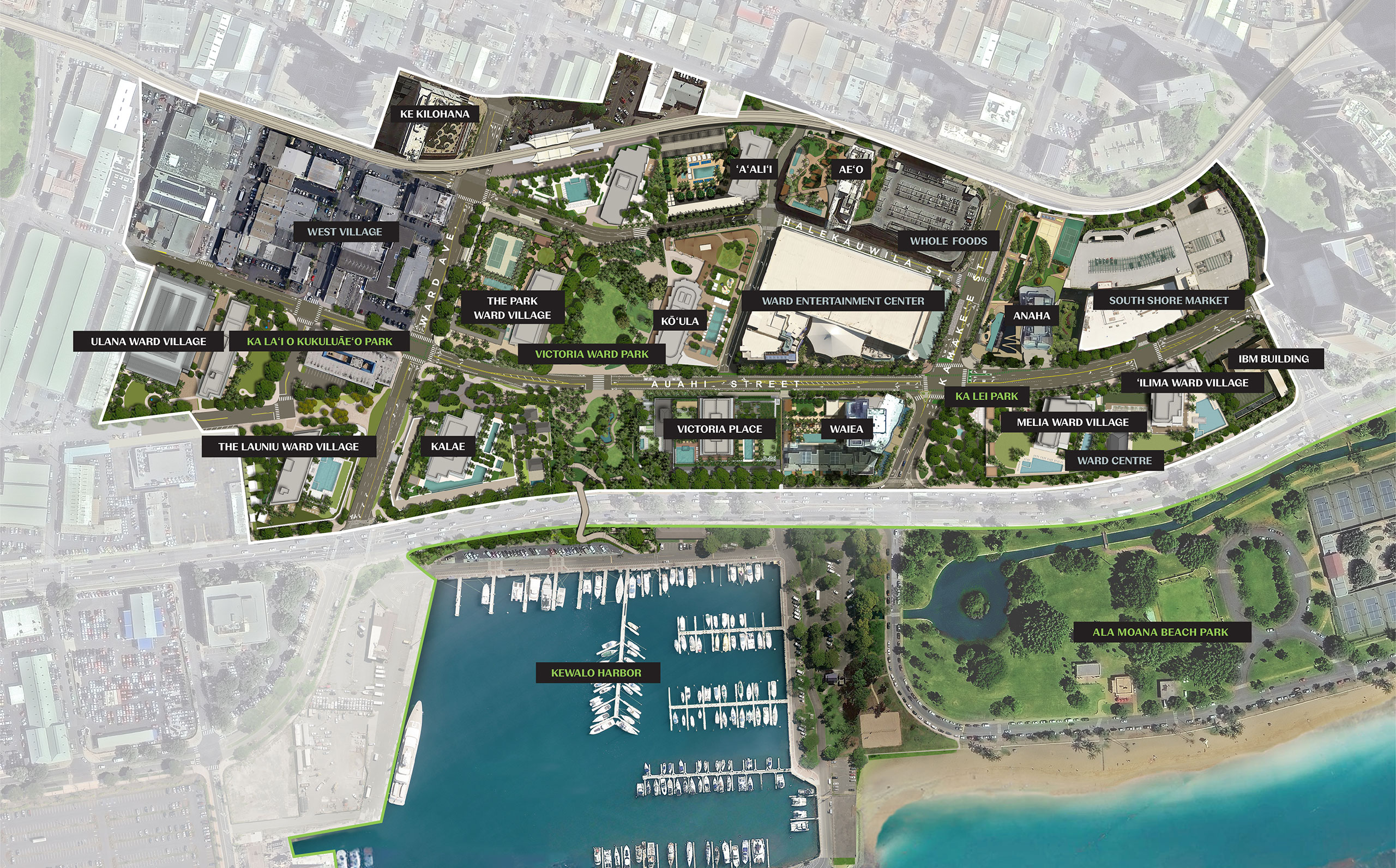
Ward Village HOA Fees by Tower
The following table compares current maintenance fees across every residential tower in Ward Village, from the earliest completed buildings to those still in development. All fees are listed per interior square foot per month. Typical monthly costs are calculated based on representative unit sizes for each bedroom count.
| Tower | Year Completed | Units | Fee/Sq Ft | Typical 1BR/Mo | Typical 2BR/Mo | Status |
|---|---|---|---|---|---|---|
| Aeʻo | 2018 | 466 | $0.78 | $530 | $780 | Resales |
| Ulana | 2025 | 697 | $0.90 | $495 | $720 | Sold Out |
| ʻAʻaliʻi | 2021 | 751 | $1.00 | $500 | $800 | Resales |
| The Park Ward Village | 2026 (opened June) | 546 | $1.05 | $630 | $1,050 | Completed |
| Kōʻula | 2022 | 566 | $1.11 | $666 | $1,110 | Resales |
| Anaha | 2017 | 318 | $1.24 | $868 | $1,240 | Resales |
| Victoria Place | 2024 | 350 | $1.25 | $875 | $1,375 | Resales |
| Waiea | 2016 | 171 | $1.26 | $1,008 | $1,575 | Resales |
| Kalae | ~2028 (est.) | 330 | $1.31 | $917 | $1,441 | Selling |
| Ke Kilohana | 2019 | 424 | $1.51 | $755 | $1,057 | Resales |
| ʻIlima | TBD | 242 | $1.86 (est.) | $1,302 (est.) | $2,046 (est.) | Now Selling (pre-construction) |
| The Launiu | ~2028 (est.) | 486 | TBD | TBD | TBD | Selling |
| Mahana | TBD | 340 | TBD | TBD | TBD | Now Selling; current pricing on request |
| Melia | TBD | 148 | TBD | TBD | TBD | Now Selling (pre-construction) |
Note: Fees reflect the most recent available data as of early 2026. Actual fees may vary by unit, floor, and stack. “Typical” monthly costs are estimates based on average unit sizes for each bedroom count in the respective tower.
What’s Included in Ward Village HOA Fees
One of the most important — and most overlooked — factors when comparing Ward Village maintenance fees is understanding exactly what each tower’s fee covers. Two towers can charge similar per-square-foot rates but deliver very different value depending on included utilities and amenities.
Utilities Included by Tower
Aeʻo ($0.78/sf) stands out as the lowest-fee tower in Ward Village partly because of what it includes: cable TV, internet, water, and sewer are all bundled into the maintenance fee. That means the true cost gap between Aeʻo and other towers is even smaller than the per-square-foot number suggests.
Kōʻula ($1.11/sf) similarly includes water, sewer, cable TV, and internet in its HOA fee. At first glance, Kōʻula appears 42% more expensive than Aeʻo, but once you factor in the bundled services, the effective difference shrinks considerably.
Victoria Place ($1.25/sf) takes a different approach. Its fee covers common area expenses and gas, but electricity and water/sewer are sub-metered — meaning you pay those separately. This is common among the ultra-luxury towers where larger units would create unpredictable utility cost-sharing.
The Park Ward Village ($1.05/sf) includes common area expenses and internet, with electricity and water/sewer sub-metered separately.
Waiea ($1.26/sf) has a unique arrangement where each unit pays a variable common area electricity component on top of the base maintenance fee. This makes Waiea’s listed fee appear somewhat lower than the actual total monthly cost.
Common Amenities Funded by HOA Fees
Every Ward Village tower provides a baseline set of amenities funded through HOA fees, but luxury tiers vary dramatically:
- All towers: Common area maintenance, landscaping, building insurance, elevator maintenance, lobby upkeep, property management
- Mid-tier towers (Aeʻo, ʻAʻaliʻi, Kōʻula, The Park): Pool, fitness center, resident lounge, BBQ areas, package rooms
- Ultra-luxury towers (Waiea, Anaha, Victoria Place, Kalae): Concierge services, wine storage, private dining rooms, spa facilities, theater rooms, valet parking
- Reserved housing (Ke Kilohana, Ulana): Amenity deck, fitness room, community gathering spaces
Cheapest vs. Most Expensive Ward Village HOA Fees
If keeping monthly carrying costs low is your priority, here’s how the Ward Village towers stack up:
Most Affordable Towers by HOA Fee
- Aeʻo — $0.78/sf: The clear winner for low HOA costs, especially considering utilities are included. A 680 sq ft one-bedroom runs approximately $530 per month in maintenance fees. The trade-off is that Aeʻo units tend to be more compact, and the building shares its ground floor with Whole Foods Market.
- Ulana — $0.90/sf: As reserved housing, Ulana was designed with affordability in mind. However, electricity, water, internet, and cable are all billed separately, so your total monthly outlay is higher than the headline fee suggests.
- ʻAʻaliʻi — $1.00/sf: The original maintenance fee at opening was $1.00 per interior square foot. With efficient micro-unit designs starting at just 277 sq ft, ʻAʻaliʻi offers some of the lowest absolute monthly HOA payments in Ward Village — as low as $277 for the smallest studios.
Most Expensive Towers by HOA Fee
- ʻIlima — $1.86/sf (estimated): The upcoming ultra-luxury tower designed by Robert A.M. Stern Architects will carry the highest per-square-foot fee in Ward Village. With only 242 units sharing amenity costs, the smaller unit count drives fees higher.
- Ke Kilohana — $1.51/sf: Surprisingly, this reserved housing tower now has the highest current fee in the development. A 53% fee increase after opening — driven by underfunded reserves and underestimated operating costs — pushed Ke Kilohana’s maintenance fees well above many luxury towers.
- Kalae — $1.31/sf: As Ward Village’s newest ultra-luxury offering, Kalae’s premium fee reflects its oceanfront position, high-end amenities, and smaller building size of 330 units.
Ward Village HOA Fee Trends and Increases
If you’re buying at Ward Village, understanding how fees change over time is just as important as knowing the initial rate. Hawaiʻi condo maintenance fees generally increase 3–5% annually, but Ward Village has seen both typical and atypical adjustments.
The Ke Kilohana Fee Spike
The most dramatic Ward Village HOA fee increase happened at Ke Kilohana, where maintenance fees jumped approximately 53% from the developer’s original estimates. The Howard Hughes Corporation initially projected monthly fees around $270 for one-bedroom units, $400 for two-bedrooms, and $525 for three-bedrooms. After the AOAO (Association of Apartment Owners) took over building management from the developer, actual operating costs proved significantly higher than projected.
Homeowners challenged the increase, but the state board ruled against them in 2021. This case is a cautionary example: developer-estimated maintenance fees during pre-sales are projections, not guarantees. The developer typically subsidizes operating costs during the initial years, and fees often increase once the AOAO assumes full control.
What Drives Fee Increases
- Insurance costs: Hawaiʻi’s property insurance market has tightened significantly, with coastal high-rise premiums increasing 15–25% annually in recent years
- Reserve fund contributions: As buildings age, reserve studies may require increased contributions for future repairs (roof, elevator, plumbing, exterior painting)
- Utility rate increases: HECO electricity rates and Honolulu Board of Water Supply rates affect common area costs
- Labor costs: Property management, security, concierge, and maintenance staff wages in Honolulu continue to rise
- Developer transition: The shift from developer-controlled management to homeowner-controlled AOAO often reveals previously subsidized costs
Pre-Sale Fee Estimates vs. Reality
For towers still in pre-sale or construction — The Park Ward Village, Kalae, The Launiu, and future towers — the listed maintenance fees are developer estimates. Based on Ward Village’s track record, you should budget for fees that are 10–20% higher than the initial estimate within the first 3–5 years of building turnover. The Ke Kilohana situation was an outlier, but modest increases are essentially guaranteed.
How Ward Village HOA Fees Compare to Other Kakaʻako Condos
Ward Village isn’t the only game in Kakaʻako. Here’s how its fees stack up against the broader neighborhood:
- Kakaʻako average maintenance fee: Approximately $0.85–$1.00/sf for mid-range buildings
- Ward Village average: Approximately $1.10/sf across completed towers — about 15–20% above the Kakaʻako average
- Honolulu condo average: $1.31/sf across all condos (March 2026 market data)
The premium is partly explained by Ward Village’s newer construction, more extensive amenity packages, and professional property management by Howard Hughes Corporation affiliates. Older Kakaʻako buildings like 801 South Street ($0.46/sf) or Hawaiki Tower ($0.66/sf) have lower fees but fewer amenities and are 15–20+ years older.
That said, some older luxury buildings carry surprisingly high fees. One Waterfront Tower charges $1.10/sf and Imperial Plaza runs $1.30/sf — comparable to or exceeding many Ward Village towers — partly due to aging infrastructure requiring more maintenance and higher reserve contributions.
Reserve Funds and Special Assessment Risk
Beyond monthly maintenance fees, two financial factors can significantly impact your total ownership cost at Ward Village:
Reserve Fund Status
Every Hawaiʻi condo association is required to conduct a reserve study that estimates future repair and replacement costs. A well-funded reserve (typically 70%+ funded) means the building is saving adequately for major expenses. An underfunded reserve increases the risk of special assessments or sharp fee increases.
Ward Village’s newer towers generally have healthier reserves because they haven’t yet faced major capital expenditures. However, as buildings age into the 10–15 year range, reserve adequacy becomes more critical. Before purchasing any Ward Village resale, request the most recent reserve study and financial statements from the AOAO.
Special Assessment Risk
Special assessments are one-time charges to cover unexpected expenses not covered by reserves. In Ward Village specifically:
- Waiea faced significant construction defect issues, with Howard Hughes Corporation committing an estimated $114.5 million to repair problems reported in 2021. While the developer covered these costs, future defect-related expenses after warranty periods expire could fall on homeowners.
- Newer towers (completed 2022 and later) benefit from lessons learned from earlier buildings but remain subject to standard construction warranty timelines.
- Reserved housing towers (Ke Kilohana, Ulana, ʻAʻaliʻi’s reserved units) may face greater special assessment strain if owners on limited budgets resist fee increases, potentially deferring maintenance.
Ward Village HOA Fees for Investors
If you’re analyzing Ward Village condos as rental investments, HOA fees directly impact your cash flow. Here’s the math that matters:
- ʻAʻaliʻi studio (350 sf): ~$350/month HOA. Typical rent: $2,200–$2,600/month. HOA as % of rent: ~14%
- Kōʻula 1BR (600 sf): ~$666/month HOA. Typical rent: $3,200–$3,800/month. HOA as % of rent: ~19%
- Anaha 2BR (1,000 sf): ~$1,240/month HOA. Typical rent: $4,500–$5,500/month. HOA as % of rent: ~25%
- Waiea 2BR (1,250 sf): ~$1,575/month HOA. Typical rent: $6,000–$8,000/month. HOA as % of rent: ~22%
As a general rule, you want HOA fees under 25% of gross rental income to maintain reasonable cash flow. The smaller, more efficiently designed towers (ʻAʻaliʻi, Aeʻo) tend to produce better investor returns because of their lower absolute carrying costs. If you’re comparing investment opportunities, our Hoʻopili HOA fees guide covers a very different cost structure for those considering suburban alternatives.
Ward Village HOA Fees for Military Buyers
Military families using BAH (Basic Allowance for Housing) to purchase at Ward Village need to factor HOA fees into their total housing cost. Your lender will include the HOA payment when calculating your debt-to-income ratio, which directly reduces your maximum purchase price.
For an O-4 with dependents receiving approximately $3,450/month BAH for Honolulu (2026 rates), a $1,000+ monthly HOA fee at an ultra-luxury tower significantly limits borrowing capacity. The more affordable towers — Aeʻo, ʻAʻaliʻi, and resale reserved housing units at Ke Kilohana or Ulana — offer more realistic options for BAH-constrained budgets, though Ke Kilohana’s elevated fees reduce that advantage.
Frequently Asked Questions About Ward Village HOA Fees
How much are HOA fees at Ward Village?
Ward Village HOA fees range from $0.78 per square foot (Aeʻo) to $1.51 per square foot (Ke Kilohana) across completed towers. For a typical one-bedroom unit, expect to pay between $500 and $1,000 per month depending on the tower and unit size. Ultra-luxury towers like Waiea and Victoria Place charge $1.25–$1.26 per square foot, while more affordable options like ʻAʻaliʻi start at $1.00 per square foot.
Which Ward Village tower has the cheapest HOA fees?
Aeʻo has the lowest HOA fee in Ward Village at $0.78 per square foot. This is especially notable because the fee includes cable TV, internet, water, and sewer. A one-bedroom unit at Aeʻo costs approximately $530 per month in maintenance fees, making it the most affordable option for monthly carrying costs.
Why are Ke Kilohana HOA fees so high?
Ke Kilohana’s HOA fees jumped approximately 53% from the developer’s original estimates after the homeowner association took over management. The Howard Hughes Corporation had initially projected lower fees, but actual operating costs — including insurance, utilities, and maintenance — proved significantly higher. The state board upheld the increase in 2021 when homeowners challenged it. At $1.51 per square foot, Ke Kilohana now has the highest per-square-foot fee of any completed Ward Village tower.
What do Ward Village HOA fees include?
All Ward Village HOA fees cover common area maintenance, landscaping, building insurance, elevator maintenance, and property management. However, included utilities vary by tower. Aeʻo and Kōʻula include cable TV, internet, water, and sewer. Victoria Place and The Park include gas but sub-meter electricity and water. Waiea charges a separate variable common area electricity component. Always verify what’s included for the specific tower you’re considering.
Do Ward Village HOA fees increase over time?
Yes. Ward Village HOA fees typically increase 3–5% annually, consistent with Honolulu condo averages. The most significant increases usually happen when the homeowner association (AOAO) takes over from the developer, as developer-era fees are often subsidized. Budget for fees 10–20% higher than initial estimates within the first 3–5 years of building occupancy. The Ke Kilohana 53% increase was an extreme outlier but illustrates the risk.
How do Ward Village HOA fees compare to other Kakaʻako condos?
Ward Village’s average maintenance fee of approximately $1.10 per square foot is about 15–20% above the broader Kakaʻako average of $0.85–$1.00 per square foot. However, some older Kakaʻako buildings with aging infrastructure charge comparable or higher fees — Imperial Plaza at $1.30/sf and One Waterfront Tower at $1.10/sf, for example. Ward Village’s premium reflects newer construction, more amenities, and professional management.
What are the HOA fees for Kalae at Ward Village?
Kalae’s maintenance fee is approximately $1.31 per square foot, based on current listing data. For a typical one-bedroom unit, expect around $917 per month, and approximately $1,441 per month for a two-bedroom. As Kalae is still in pre-sale, this is a developer estimate and may increase after building turnover to the homeowner association.
Are Ward Village HOA fees tax deductible?
HOA fees on your primary residence are generally not tax deductible. However, if you rent out your Ward Village condo, HOA fees are deductible as a rental expense on Schedule E. For investment properties, this deduction can meaningfully offset rental income. Consult a tax professional familiar with Hawaiʻi real estate for your specific situation.