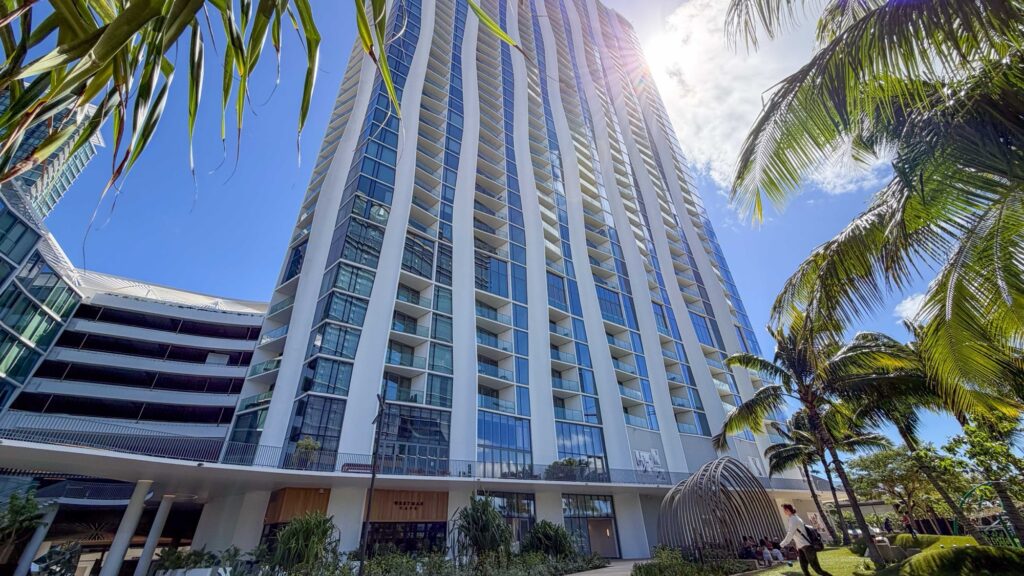
Hawaii condo HOA fees are among the highest in the nation. Honolulu Board of Realtors data reported in June 2026 put the April average at $715 a month for Oʻahu condos under 500 square feet, and more than $1,500 for units over 1,100 square feet. For a 900 sq ft two-bedroom in Kakaʻako, expect $800–$1,500 monthly. In Central Oʻahu developments like Koa Ridge, fees depend on home type: 2025–2026 public reports put detached Nanea III homes near $150 a month including master dues, and townhome phases at about $400–$1,000. This guide breaks down what drives those numbers, how new construction HOA fees differ from resale buildings, and exactly how to evaluate whether a condo’s fees are reasonable before you buy.
Why Hawaii Condo HOA Fees Are Higher Than the Mainland
If you’re moving from the mainland, Oahu HOA fees will likely cause sticker shock. A $600/month fee that seems outrageous by Denver standards is perfectly normal here. Several Hawaii-specific factors drive these costs:
- Property insurance: Hawaii’s location exposes buildings to hurricanes, flooding, and salt-air corrosion. Master insurance policies for condo buildings can run 2–3x what comparable mainland buildings pay, and rates have climbed sharply since 2023.
- Construction and labor costs: Nearly all building materials are shipped to the islands, adding 30–60% to repair and maintenance costs. Licensed contractors are in high demand, and labor rates reflect the cost of living.
- Climate wear: Salt air, tropical humidity, and intense UV accelerate deterioration of roofing, paint, metal fixtures, and concrete. Buildings need more frequent maintenance cycles than mainland properties.
- Utility costs: Hawaii has the highest electricity rates in the U.S. Oʻahu residential customers averaged about 41 cents per kWh in 2025 (Hawaiian Electric). Common-area lighting, elevators, pools, and HVAC all contribute to higher operating budgets.
- Regulatory requirements: Hawaii’s Condominium Property Act (HRS Chapter 514B) mandates reserve studies and minimum reserve funding levels, which is actually a good thing for buyers but adds to monthly fees.
The bottom line: Hawaii condo HOA fees typically run about 2x the national average. But understanding why helps you distinguish between fees that reflect real costs and fees that signal mismanagement.
Oahu HOA Fees by Area: What to Expect
Hawaii condo HOA fees vary dramatically depending on location, building age, and amenities. Here’s what you’ll find across Oʻahu’s major condo markets:
| Area | Typical Monthly HOA | Per Sq Ft | What Drives Costs |
|---|---|---|---|
| Kakaʻako / Ward Village | $800–$1,500 | $0.70–$1.20 | High-rise elevators, luxury amenities, concierge |
| Ala Moana | $600–$1,200 | $0.60–$1.10 | Older buildings with higher maintenance, pools |
| Central Oʻahu (Koa Ridge, Mililani) | $55–$1,000+ by home type (Mililani master dues to Koa Ridge townhome phases; see Koa Ridge fee schedules) | Varies by home type | Townhome/low-rise structures, fewer shared amenities |
| ʻEwa Beach / Hoʻopili | About $160–$850 by neighborhood and home type, incl. master dues (2025–2026 public reports; see Hoʻopili fee schedules) | Varies by home type | Newer construction, townhomes, community amenities |
| Waikīkī | $700–$1,400 | $0.80–$1.50 | Aging towers, resort-style amenities, high insurance |
A useful benchmark: for middle-class new construction on Oʻahu, roughly $1 per square foot per month is a standard range. Anything significantly above that warrants a closer look at what’s driving costs. For specific fee breakdowns at Hoʻopili, see our Hoʻopili HOA fees guide.
New Construction vs Resale: How Hawaii Condo HOA Fees Differ
This is where most guides fall short. New construction HOA fees in Hawaii behave very differently from resale buildings, and understanding the trajectory matters more than the starting number.
New Construction HOA Fees (Years 1–5)
- Lower initial fees: New buildings start with lower maintenance costs because nothing needs repair yet. Expect fees 15–30% below comparable older buildings.
- Developer-subsidized period: Some developers absorb costs during early sales phases to keep advertised fees attractive. Once the developer exits, fees often increase.
- Reserve fund ramp-up: New buildings start with minimal reserves. Monthly contributions increase as the association builds toward the reserve study’s target funding level.
- Warranty coverage: Major systems (roofing, plumbing, structural) are under builder warranty, reducing maintenance costs initially.
- Predictable trajectory: Expect 3–8% annual increases in years 1–5 as the building transitions from developer to homeowner control and reserves build.
At Ward Village, for example, newer towers like Kalae and Victoria Place launched with competitive per-square-foot fees. But buyers should budget for increases as the buildings mature and reserve studies identify long-term capital needs.
Resale Buildings (10+ Years)
- Higher but stable fees: Mature buildings have established maintenance budgets based on actual operating history.
- Risk of special assessments: Older buildings may hit you with one-time special assessments — sometimes $10,000–$50,000+ per unit — for deferred maintenance like elevator replacement, concrete spalling repair, or re-roofing.
- Reserve fund health varies widely: Some older buildings are well-funded; others have dangerously low reserves. This is the single most important thing to evaluate.
- Aging infrastructure costs: Elevators, plumbing, electrical systems, and building envelopes all reach major replacement milestones at 20–30 years.
The key insight: a low HOA fee on an older building isn’t always a bargain. It may mean the association is underfunding reserves, and a massive special assessment is around the corner. Always check the reserve study.
What Your Hawaii Condo HOA Fees Actually Cover
Your monthly HOA fee is split across several budget categories. Here’s a typical breakdown for an Oʻahu condo:
- Master insurance (20–35%): The building’s property and liability insurance — often the single largest expense. Many Hawaiʻi associations have seen master-policy premiums jump since 2022, some by several times in a single year.
- Utilities/common area (15–25%): Electricity for elevators, hallway lighting, pool pumps, lobby cooling, and sometimes water/sewer for the entire building.
- Reserve contributions (15–25%): Monthly deposits into the reserve fund for future major repairs (roof, elevators, painting, plumbing).
- Management fees (8–12%): Professional property management company fees.
- Maintenance/repairs (10–20%): Landscaping, janitorial, routine repairs, pest control.
- Amenities (5–15%): Pool maintenance, fitness center, concierge, security. Luxury buildings with resort-style amenities cost more.
When comparing condos, ask for the full operating budget — not just the total fee. A building spending 30% on insurance and 20% on reserves is in a very different financial position than one spending 30% on insurance and 5% on reserves.
How to Read a Reserve Study (Step by Step)
Under Hawaiʻi law (HRS § 514B-148), condominium associations must prepare reserve studies and fund replacement reserves based on those studies. A study not prepared by an independent reserve study preparer must be reviewed by one at least every three years. This is one of the most valuable documents you can review before buying — and almost no one reads them. Here’s how.
Step 1: Check the Funding Level
The reserve study will show a percent funded figure. This tells you how much money the association has compared to how much it should have based on the age and condition of building components.
- 70–100% funded: Healthy. The association is on track.
- 50–69% funded: Fair. Some risk of future fee increases or small assessments.
- 30–49% funded: Below average. Higher risk of special assessments.
- Below 30% funded: Red flag. Expect significant fee increases or large special assessments.
Step 2: Review the 30-Year Cash Flow Plan
Hawaii law requires a 30-year projection of income and expenses. Look at:
- Planned expenditures: When are major expenses coming? Elevator modernization ($200,000–$500,000 per elevator), roof replacement ($500,000–$2M), concrete repair ($100,000–$1M+).
- Contribution increases: Does the plan show steady, gradual increases (good) or sudden large jumps (concerning)?
- Deficit years: Are there years where projected expenses exceed available reserves? That’s when special assessments happen.
Step 3: Look at Component Inventory
The study lists every major building component, its estimated useful life, current age, and replacement cost. Pay attention to:
- Components nearing end of useful life with high replacement costs
- Whether cost estimates seem reasonable (outdated studies may underestimate Hawaii construction costs)
- When the study was last updated — a study older than 3 years may not reflect current costs
Step 4: Compare the Study Date to Current Reserves
Ask the association for the current reserve fund balance and compare it to the study’s projections. If the actual balance is significantly below projections, the association may have been underfunding — a warning sign.
If you’re new to the home buying process, our guide to buying new construction in Hawaiʻi covers the full purchasing timeline, including when and how to request these documents.
10 Red Flags of Poor HOA Management
Before buying any Hawaiʻi condo, watch for these warning signs:
- Reserve fund below 50% funded. The association hasn’t been saving enough for major repairs.
- No reserve study, or one more than 3 years old. HRS § 514B-148 requires budgets based on a reserve study, so a missing or stale study suggests the board isn’t following the law.
- History of special assessments. One assessment might be reasonable; repeated assessments indicate chronic underfunding.
- Unusually low fees for the building type. If fees seem too good to be true compared to similar buildings, reserves are likely underfunded.
- High delinquency rate. If more than 10% of owners are behind on dues, the association has cash flow problems — and you’ll pay for it.
- Pending or active litigation. Lawsuits (construction defect, slip-and-fall, board disputes) can drain reserves and increase insurance costs.
- Deferred maintenance visible on walkthrough. Peeling paint, rusted railings, cracked concrete, broken pool equipment — these signal a board that’s not investing in upkeep.
- No recent audited financial statements. Well-run associations have annual audited financials. If they can’t produce them, walk carefully.
- Board turnover or vacancies. A board that can’t retain members or fill seats may indicate dysfunction.
- Insurance coverage gaps. Ask whether the master policy covers full replacement cost. Some associations reduce coverage to keep fees low — leaving owners exposed.
Questions to Ask the HOA Before You Buy
Go beyond “what are the monthly fees?” and ask these specific questions:
- What is the current reserve fund balance and percent funded? (Get the actual number, not just “we’re in good shape.”)
- Can I see the most recent reserve study and the 30-year cash flow plan?
- Have there been any special assessments in the past 5 years? Are any planned?
- What is the current owner delinquency rate?
- Is there any pending or threatened litigation?
- What percentage of units are owner-occupied vs. investor/rental? (High rental ratios can affect maintenance standards and loan eligibility.)
- When was the last fee increase, and what was the percentage?
- What does the master insurance policy cover, and when does it renew? (Renewal dates matter — rates may spike.)
- Are there any known building defects or upcoming major repairs?
- What management company handles the property, and what’s their track record?
In Hawaiʻi, sellers are required to provide the association’s financial documents as part of the resale disclosure package. For new construction at developments like Hoʻopili, the developer’s public report (required under HRS § 514B-83) must include a breakdown of maintenance fees and reserve contributions based on a reserve study.
Frequently Asked Questions About Hawaii Condo HOA Fees
How much are average HOA fees in Hawaii?
Honolulu Board of Realtors data reported in June 2026 put the April average at $715 a month for Oʻahu condos under 500 square feet, and more than $1,500 for units over 1,100 square feet. Fees vary significantly by area: Kakaʻako and Ward Village condos run $800–$1,500/month, while 2025–2026 public reports put Koa Ridge new-construction townhomes at about $400–$1,000/month including master dues.
Why are Hawaii HOA fees so high compared to the mainland?
Hawaii condo fees are roughly 2x the national average due to higher property insurance costs (hurricane and flood exposure), expensive construction materials (everything is shipped in), the highest electricity rates in the U.S., accelerated building deterioration from salt air and humidity, and state-mandated reserve funding requirements.
What do Hawaii condo HOA fees typically include?
Typical Hawaii condo HOA fees cover master insurance (20–35% of the budget), common area utilities like electricity and water (15–25%), reserve fund contributions for future repairs (15–25%), property management (8–12%), maintenance and landscaping (10–20%), and amenities such as pools, fitness centers, and security (5–15%).
Are new construction HOA fees lower than resale condos in Hawaii?
Yes, initially. New construction HOA fees in Hawaii are typically 15–30% lower than comparable older buildings because nothing needs repair yet and some systems are under warranty. However, expect fees to increase 3–8% annually in years 1–5 as reserve funds build and the building transitions from developer to homeowner control. The long-term trajectory matters more than the starting fee.
What is a reserve study and why does it matter?
A reserve study is a financial planning document that inventories a building’s major components (roof, elevators, plumbing, etc.), estimates their remaining useful life, and calculates how much the association needs to save for future replacements. Hawaii law (HRS § 514B-148) requires condominium associations to prepare reserve studies and fund reserves accordingly. A well-funded reserve (70%+ funded) protects you from surprise special assessments.
What is a condo special assessment in Hawaii?
A special assessment is a one-time charge levied by the condo association to cover major expenses that the reserve fund can’t cover — such as elevator replacement, roof repairs, or concrete spalling remediation. In Hawaii, special assessments can range from $5,000 to $50,000+ per unit. They’re more common in older buildings with underfunded reserves, which is why reviewing the reserve study before purchasing is critical.
How much are Kakaako HOA fees?
Kakaʻako HOA fees typically range from $800 to $1,500 per month, with per-square-foot rates of $0.70–$1.20. Newer Ward Village towers tend toward the lower end of that range thanks to energy-efficient design, while older Kakaʻako towers with aging infrastructure may be at the higher end. Luxury buildings with concierge services, multiple pools, and extensive amenities will be at the top of the range.
How can I tell if a condo’s HOA fees are too high or too low?
Compare fees on a per-square-foot basis against similar buildings in the same area. Fees well above average may indicate aging infrastructure or luxury amenities; fees well below average could mean the association is underfunding reserves — which often leads to special assessments. Always request the reserve study and check the percent funded figure: anything below 50% is a concern.
Your next step
Buying new for the first time?
Team Wong can walk you through the contract, the deposits and the timeline before you visit a sales office.
Ask Team Wong